
Blog
The 5/3/1 Program
The Most Effecient Strength System Ever Created?
Strength training does not need to be complicated to be effective, and some of the most successful programs in the history of strength sports are built on very simple principles: Consistency, progressive overload, smart fatigue management, and patience form the foundation of long term strength development.
Enter Jim Wendler’s 5/3/1 program, one of the best examples of how powerful a simple system can be when it is applied consistently over time. Originally designed for powerlifters who needed a sustainable way to keep getting stronger, the 5/3/1 system has grown into one of the most widely used strength programs in the world. It is used by competitive powerlifters, strength athletes, football players, functional fitness competitors, and everyday lifters who simply want to become stronger. The structure is straightforward, the progression is steady, and the workload is manageable enough that it can fit into almost any training schedule.
I first started incorporating the 5/3/1 structure into my own training because it worked extremely well with the reality of a busy schedule. Working long nursing shifts, training for competitions, and now navigating life as a new mom means that some days the gym needs to be efficient. There are days when a long strength session just is not realistic, and programs that require multiple heavy working sets across several lifts can quickly become difficult to sustain. One of the biggest advantages of 5/3/1 is that each session is built around a single main lift with one challenging working set. That structure allows you to train hard without creating excessive fatigue that interferes with the rest of your training or recovery. Over time I realized that this system also fits extremely well alongside functional fitness training, conditioning workouts, and sport specific work. It is simple enough to add into a workout without dominating the entire training session, yet structured enough to steadily build serious strength over the long term. This article will walk through everything you could want to know about the Wendler 5/3/1 system, including the history behind the program, why it was created, how the structure works, how to build a training program around it, and how it can be used either as a complete strength program or as a strength component within a larger athletic training plan.
The Creator of the 5/3/1 Program
The 5/3/1 program was created by strength coach and powerlifter Jim Wendler. Before becoming known for the program that now bears his name, Wendler had an extensive background in strength sports and competitive powerlifting. During his lifting career he achieved impressive numbers including a squat over one thousand pounds, a bench press approaching six hundred seventy five pounds, and a deadlift close to seven hundred pounds. In addition to competing as a powerlifter, Wendler also spent time working in collegiate strength and conditioning. One of the programs where he worked was the University of Kentucky football strength program. His experience working with athletes and training at a high level in powerlifting gave him a clear perspective on what worked in the long term and what did not. Through years of training and coaching he noticed a common problem in strength programming. Many programs were far more complicated than they needed to be, and they often relied heavily on frequent maximal efforts. Lifters would constantly chase new one repetition maximum attempts, stack multiple heavy lifts in a single session, and accumulate fatigue faster than their bodies could recover. While those approaches could produce short term results, they often led to plateaus, burnout, or injury. Wendler wanted a system that was simpler and more sustainable. He wanted something that would allow athletes to steadily build strength for years rather than pushing extremely hard for a few months and then stalling out. That philosophy eventually became the 5/3/1 program, which he first introduced in his book titled 5/3/1 The Simplest and Most Effective Training System to Increase Raw Strength.
Why the 5/3/1 Program Was Created
The creation of the 5/3/1 program came from a desire to fix the common mistakes seen in many strength programs. A large number of lifters approach strength training by constantly trying to lift the heaviest weight possible, often testing their maximum strength far too frequently. While maximal lifting has its place, doing it too often creates significant fatigue and reduces the ability to recover between sessions. When recovery suffers, progress eventually slows or stops entirely. Instead of constantly pushing for maximal lifts, Wendler designed the 5/3/1 system around submaximal training that allows lifters to train hard while still maintaining enough energy to recover and continue progressing. This approach offers several important advantages. It allows consistent progress for long periods of time because the weights increase gradually rather than jumping dramatically between sessions. It also makes the program far easier to combine with other forms of training such as conditioning workouts, sport specific drills, or functional fitness programming. The moderate workload means that athletes can continue developing strength without overwhelming their recovery capacity. In many ways the program reflects a mature and long term approach to training. It encourages lifters to focus less on ego lifting and more on building strength that lasts for years.
The Core Principles of the 5/3/1 System
The effectiveness of the 5/3/1 program comes from a few key principles that guide how the program is structured and progressed. The first and most important concept is starting lighter than you think you need to. Instead of basing all percentages on your true one repetition maximum, the program uses something called a training max. The training max is typically set at ninety percent of your true one repetition maximum, and all of the percentages in the program are calculated from that lower number. This approach ensures that the weights are challenging but still manageable, which allows lifters to maintain good technique and accumulate quality repetitions over time. Another major principle is slow and steady progression. Rather than making large increases in weight every week, the program adds small increments at the end of each cycle. Typically this means adding five pounds to upper body lifts and ten pounds to lower body lifts. These increases may seem small in the moment, but when they accumulate over months and years they result in substantial improvements in strength. The program also emphasizes focusing on the most productive compound lifts. Instead of filling workouts with dozens of different exercises, the program centers around a small number of foundational barbell movements that provide the greatest return for overall strength development.
How the 5/3/1 Program Works
The name of the program comes from the repetition scheme used during the main working sets. Each training cycle lasts four weeks, and each week focuses on a different intensity and repetition range. The first three weeks gradually increase in intensity, and the fourth week is used for recovery before the next cycle begins.
Week one uses the following percentages and repetitions:
•65 percent for 5 repetitions
•75 percent for 5 repetitions
•85 percent for 5 or more repetitions
Week two uses a slightly heavier progression:
•70 percent for 3 repetitions
•80 percent for 3 repetitions
•90 percent for 3 or more repetitions
Week three is the heaviest week of the cycle:
•75 percent for 5 repetitions
•85 percent for 3 repetitions
•95 percent for 1 or more repetitions
Week four is the deload week:
•40 percent for 5 repetitions
•50 percent for 5 repetitions
•60 percent for 5 repetitions
The final set in each of the first three weeks is often referred to as the plus set. During this set you perform as many repetitions as possible while maintaining proper form. This single challenging set is where most of the intensity of the program occurs. After completing the four week cycle you increase your training max slightly and repeat the process.
The Four Core Lifts
The entire program revolves around four majorbarbell movements that form the foundation of strength training.
•Squat
•Bench press
•Deadlift
•Overhead press
Each of these lifts trains multiple muscle groups and builds full body strength. The squat develops the quadriceps, glutes, hamstrings, and core while improving lower body power and stability. The bench press is the primary upper body pressing movement and develops the chest, shoulders, and triceps. The deadlift trains nearly every muscle group in the body while building tremendous posterior chain strength. The overhead press strengthens the shoulders, upper back, and core while improving upper body stability and pressing power. Because these lifts involve large muscle groups and heavy loads, they provide the greatest stimulus for overall strength development.
Structuring a Weekly Training Schedule
A traditional 5/3/1 program spreads the four main lifts across four training days. Each day focuses on one primary movement followed by accessory exercises that support that lift.
Day One:
•Overhead press (Quick-Lock Dumbbells)
Day Two:
•Deadlift (Olympic Barbell)
Day Three:
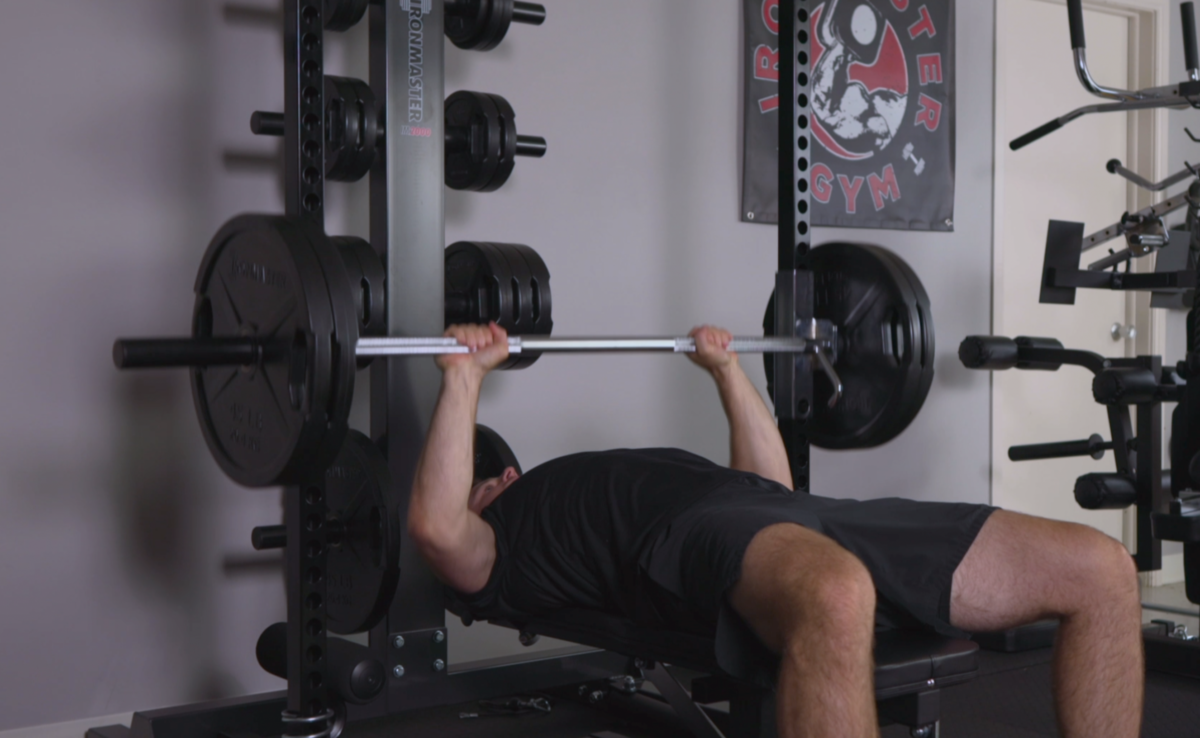
•Bench press (IM2000)
Day Four:
•Squat (Belt Squat Attachment)
This structure allows each lift to receive full focus during its session while also providing adequate recovery between heavy lower body days.
Accessory Work and How to Program It Correctly
Accessory work plays an important role in the 5/3/1 program, but it needs to be programmed carefully so that it supports the main lifts rather than interfering with them. The goal of accessory movements is to build muscle, strengthen weak points, and improve balance between muscle groups. At the same time they should not be so exhausting that they reduce performance on the primary lift. A helpful guideline when selecting accessory exercises is to choose movements that complement the main lift by training supporting muscles without duplicating the exact same movement pattern at high intensity. For example, on a bench press day the primary lift already places significant stress on the chest, shoulders, and triceps. Programming extremely demanding pressing movements immediately afterward can create unnecessary fatigue. Instead of doing heavy weighted dips after a bench press session, a better approach would be to select movements that balance the workload and support shoulder health. Examples of effective accessory work on a bench press day might include pull ups or lat pulldowns to strengthen the upper back, dumbbell rows to build stability around the shoulder blades, face pulls to improve shoulder health, and moderate triceps work such as cable pushdowns or lighter dumbbell extensions. On a squat day accessory work should focus on strengthening the muscles that support the squat while avoiding movements that excessively tax the lower back or central nervous system. Good options might include lunges, step ups, leg presses, hamstring curls, glute bridges, and core stability exercises such as planks or hanging leg raises.Deadlift day often benefits from accessory movements that strengthen the posterior chain and upper back. Exercises such as Romanian deadlifts, back extensions, glute ham raises, and barbell rows can all help reinforce the muscles that contribute to a strong pull from the floor. Overhead press day can be complemented with upper back work, lateral raises, rear delt exercises, and moderate triceps work. These movements help stabilize the shoulders and improve pressing strength without overwhelming the joints. The key concept with accessory work in the 5/3/1 system is balance. You want enough volume to support strength development, but not so much that recovery becomes compromised.
Using 5/3/1 as a Stand Alone Strength Program
For someone whose primary goal is simply to get stronger, the 5/3/1 program works extremely well as a complete training system. Each workout begins with the main lift following the percentage structure of the program and then continues with several accessory exercises that target supporting muscle groups. What I like most about running it this way is how straightforward it feels when you walk into the gym. There is no second guessing what you should be doing or how hard you should be pushing, because the structure is already laid out for you. That kind of clarity goes a long way, especially on days where you are short on time or energy. A typical bench press day might begin with the three main working sets following the weekly percentages and then continue with accessory movements such as incline dumbbell presses, pull ups, rows, and core work. A squat day might include lunges, hamstring curls, and abdominal work after the main sets. This structure provides enough training volume to develop strength and muscle while still keeping sessions relatively efficient. Over time you can start to tailor those accessory movements to your own weak points, whether that is adding more upper back work to support pressing or more posterior chain work to bring up your deadlift. Another thing I have found is that this setup makes it easy to adjust based on how you are feeling that day without completely derailing the program. If I am feeling good I might push the accessory work a little more, and if I am coming off a long shift or just low on energy I can keep it minimal and still get the most important work done with the one max set of the main lift. That flexibility is a big reason why this works so well as a stand alone program, because it meets you where you are while still moving you forward.
Adding 5/3/1 to Functional Fitness Training
One of the reasons I personally enjoy the 5/3/1 structure is how easily it fits into functional fitness training. Many strength programs require multiple heavy working sets across several lifts, which can create a significant amount of fatigue. When you are also performing conditioning workouts or preparing for competitions, that level of fatigue can quickly interfere with recovery. It becomes a constant balancing act between getting stronger and not feeling run down. With 5/3/1 the main lift only requires three primary working sets, and only one of those sets is truly challenging. That makes it surprisingly easy to integrate into a larger training session. You still get the benefit of structured strength work, but it does not dominate your entire day or take away from the rest of your training. For example, if I am doing a conditioning workout that includes lighter deadlifts, I often continue with the same movement pattern after the workout and transition directly into my 5/3/1 sets. The body is already warm and the movement pattern is already activated, so the transition feels natural. I simply increase the weight and perform the three programmed sets or possibly even just two if my metcon weight was higher than the first percentage of the 5/3/1 program for that day. Five repetitions at the first percentage, Five repetitions at the second percentage, then the final set where I push for as many quality repetitions as possible.This approach allows strength work to blend into the training session rather than requiring an entirely separate strength workout. It also keeps things efficient, which is huge when you are trying to fit training around work and everything else. Some days that might be the only strength work I do, and other days I might add a little accessory work after, but either way I know I am still building strength without overcomplicating the session training for several different events at once
Why Strength Training Becomes More Important With Age
Strength training becomes increasingly important as we get older because the body naturally loses muscle mass and bone density over time. This process can lead to reduced strength, decreased mobility, and a higher risk of injury if it is not addressed. It is not something that happens overnight, but over the years it adds up, and you really start to notice the difference if you are not actively doing something to counter it. Regular resistance training helps maintain muscle mass, supports bone health, and improves joint stability. It also plays an important role in metabolic health and overall physical independence later in life. From both a training perspective and what I have seen in healthcare, the people who stay consistent with strength training tend to move better, recover better, and maintain a higher quality of life as they age. Programs like 5/3/1 provide a structured way for people to build strength safely and progressively. Because the program increases weight slowly and emphasizes good technique, it can be followed for years without excessive strain. That long term consistency is really what matters, and having a program that you can stick with through different seasons of life makes a huge difference.
Why 5/3/1 Is an Excellent Starting Point
Many people believe that the best training programs must be extremely complex. In reality simple programs are often the most effective because they are easier to follow consistently. When a program is straightforward, you are more likely to stick with it, and consistency is what ultimately drives results. The 5/3/1 system teaches several important habits that benefit both beginners and experienced lifters. It reinforces patience, emphasizes proper loading and progression, and focuses on the foundational lifts that produce the greatest strength gains. Instead of constantly chasing new numbers, you learn to build strength over time and trust the process. Another reason this program works so well as a starting point is that it is built around just four main lifts that are relatively simple to learn and apply to real world movement. The squat, bench press, deadlift, and overhead press all mirror basic movement patterns like squatting down, pushing something away from you, hinging at the hips to pick something up, and pressing weight overhead. These are movements that most people can learn quickly and perform safely with a bit of practice, especially compared to more technical Olympic lifts that require a higher level of coordination and skill to master. That simplicity makes it much easier for beginners to build confidence under the bar while still developing meaningful strength. A beginner who follows this program consistently for a year while focusing on proper technique will develop a strong foundation that supports any future training goals. That foundation makes it much easier to branch out into other styles of training later on, whether that is more advanced strength work or incorporating more conditioning. It sets the tone early on for approaching training in a way that is sustainable, effective, and realistic long term.Final Thoughts The Wendler 5/3/1 program has remained popular for more than a decade because it consistently produces results. Its structure is simple, its progression is steady, and its workload is manageable enough to sustain for years. Whether someone is a competitive powerlifter, a functional fitness athlete, or simply someone who wants to build long term strength, the program provides a framework that works. For me personally it has been one of the easiest ways to keep strength training consistent even during busy periods of life, or adding a little extra depending on what is coming up on my event schedule. Some days the session is short and focused. Other days it expands with additional accessory work or conditioning. Either way the main lift gets completed and progress continues. Strength is one of the most valuable physical qualities we can develop. It improves athletic performance, supports long term health, and helps us handle the physical demands of everyday life. Programs like 5/3/1 remind us that building strength does not require endless complexity. Sometimes the most effective approach is also the simplest.
About The Author

Taylor Jones is a versatile fitness enthusiast being a jack of all trades. Having initially excelled as a D-2 soccer player during her collegiate years, she transitioned her passion for sports into functional fitness, obstacle course racing, and a deep affection for outdoor adventures. Despite her demanding profession as a nurse, where she tirelessly works 12-hour shifts, Taylor manages to dedicate herself to rigorous training for competitions while finding solace in the company of her husband and two beloved dogs. With a keen focus on her athletic pursuits, Taylor’s primary objective has revolved around participating in the RF Challenges over the past two years. In both 2023 and 2022, her dedication bore fruit as she clinched the 2nd place title for the overall scoring.
Build Your Dream Home Gym with Ironmaster
Since 1978, Ironmaster has been trusted by serious lifters and home gym enthusiasts for delivering the best in heavy-duty, modular strength equipment built to last a lifetime. Whether you’re just getting started or upgrading your existing setup, Ironmaster.com has everything you need to train smarter at home—without compromising on quality. Start with the foundation: the legendary Super Bench Adjustable Weight Bench, known for its rock-solid stability and unmatched versatility. Then, level up your workouts with our Quick-Lock Adjustable Dumbbells, a fan-favorite for their rapid adjustability and space-saving, plate-sharing design. Need serious strength training capabilities? Add the all-in-one IM2000 Self-Spotting Machine, a hybrid Smith-style half rack that makes it easy to lift heavy safely, even when training alone. With dozens of compatible attachments, you can outfit a full-body gym in your garage, basement, or spare room.
Ready to save? Use our Custom Package Builder to bundle your favorite equipment and unlock automatic discounts—the more you bundle, the more you save.
Keywords List
- Wendler 5/3/1 program
- strength training program
- powerlifting program
- beginner strength program
- hypertrophy vs strength training
- functional fitness strength training
- compound lifts workout
- squat bench deadlift overhead press
- gym program for busy schedule
- sustainable strength training
- long term muscle growth
- strength and conditioning
- home gym strength program
- efficient workouts for strength
- lifting program for beginners
- strength training for athletes
- build muscle and strength
- fatigue management training
Hashtags:
#StrengthTraining #Powerlifting #OlympicWeights #ResistanceTraining #FunctionalFitness #531Program #Wendler531 #ProgressiveOverload #CompoundLifts #Squat #Bench #Deadlift #adjustabledumbbells #weightbench