
Blog
Training for your First Triathlon
From GPP to the Finish Line

As a functional fitness athlete, you’re already used to pushing your limits. You know the burn of a high-rep barbell complex, the gasping fatigue of a metcon, and the satisfaction of mastering a new skill or PR. Your training isn’t just about aesthetics or one-rep maxes it’s about building a body that performs. So why not take that fitness and test it in a new arena? For many athletes, a triathlon is the next big challenge that merges endurance, skill, and mental toughness. And contrary to popular belief, you don’t have to give up your strength training or identity as a CrossFitter to do it.
This guide is for you: the everyday athlete curious about endurance racing, intrigued by the triathlon lifestyle, and committed to training smartly and efficiently. Whether you’re targeting a Sprint distance or feeling bold enough for the standard Olympic length, we’ll walk through everything you need to know from understanding race formats to training specifics for each modality, all while integrating your love of functional training.
Understanding Triathlon Basics: Distances, Format, and First-Time Strategy
Before diving into the specifics of each sport, it’s essential to understand the layout and demands of a triathlon. A triathlon is a multi-sport endurance event that combines swimming, cycling, and running, performed sequentially. The Sprint and Olympic formats are the most popular for beginners due to their manageable distances and shorter training timeframes.
Sprint triathlons consist of a 750-meter swim, a 20-kilometer bike ride, and a 5-kilometer run. These events typically take athletes between one and two hours to complete, depending on experience and terrain. Olympic-distance triathlons double the distances: a 1500-meter swim, a 40-kilometer bike ride, and a 10-kilometer run, generally taking two to four hours.
Triathlons are more than just three sports combined. The transitions between each discipline (known as T1 between the swim and bike, and T2 between the bike and run) require planning and practice. A smooth, efficient transition can save time and mental stress. Functional fitness athletes are already familiar with quick gear changes and moving between movements under fatigue skills that directly translate to efficient transitions.
First-timers should prioritize completing the race rather than setting performance goals. Consider it a new experience and a test of your ability to adapt. With a functional background, you already have a strong engine and physical capacity. The goal now is specificity, not starting from scratch. Many athletes choose to hire a coach or follow an online program. However, with the right mindset, gear, and plan, training can be entirely self-guided while keeping up with your HIIT classes or other functional fitness programming.
The Swim: Skills, Safety, and the Silent Struggle
The swim portion of a triathlon is often the most intimidating. Open water swims are disorienting, chaotic, and require composure under pressure. For most athletes, especially those from non-aquatic sports, it’s the weakest leg. But this presents a great opportunity for improvement. The difference between a comfortable swim and a panic-filled one often lies in familiarity and technique.
If your race is a Sprint, expect a 750-meter swim roughly 15 to 25 minutes for a beginner. The Olympic swim doubles that distance, and can take 25 to 45 minutes. If it’s in open water, you’ll need to learn how to sight, swim straight, and manage pacing in unpredictable conditions. For pool triathlons (more common in entry-level events), you’ll face a more controlled environment but less race realism.
Gear for the swim is simple but crucial. A good set of anti-fog goggles makes all the difference. Practice with them during every swim to ensure a leak-free fit. Swim caps are mandatory and often provided on race day. Brightly colored caps (neon green, pink, or yellow) are ideal for open water to increase visibility. A wetsuit may be optional or mandatory depending on water temperature, but it’s worth using even if not required it adds buoyancy and conserves energy. Choose a triathlon-specific wetsuit if possible, which allows more shoulder mobility than surfing wetsuits.
Your swim training should begin with form. Functional athletes excel at structured workouts, so think of each session as a skill-based WOD. Focus on drills like the catch-up drill, fingertip drag, and body position exercises with a pull buoy. Initially, aim for two 30-minute sessions per week. As you improve, add interval sets like 10x100m at moderate effort with 15-30 seconds rest. Once every couple of weeks, simulate race conditions with a longer, continuous swim.
Include open water sessions at least twice before race day if your event is in a lake or ocean. Practice sighting by picking a landmark and lifting your eyes every 6-8 strokes. Learn to breathe bilaterally to reduce neck fatigue and improve symmetry. Most importantly, build mental comfort. You won’t win the race in the water, but a panic attack can certainly ruin it. Use each swim as an opportunity to cultivate calm under discomfort.
The Bike: Gear, Grit, and the Power of Pacing
The cycling leg is the longest portion of most triathlons, both in time and distance. In a Sprint, expect 12-16 miles of riding; in an Olympic, plan for around 25 miles. Cycling requires aerobic endurance, bike handling skills, gear knowledge, and muscular resilience.
Start with the gear. You don’t need an expensive triathlon bike. A road bike is ideal, but even a hybrid or fitness bike can suffice for your first race. Visit a local bike shop for a professional fitting it improves comfort, efficiency, and injury prevention. Clip-in pedals can increase power transfer, but they come with a learning curve. If you’re new to cycling, flat pedals with running shoes will keep transitions easier.
Don’t overlook comfort gear. A padded bike saddle and cycling shorts with a chamois can dramatically reduce fatigue on longer rides. A helmet is mandatory no helmet, no race. Make sure it fits snugly without pinching and is certified for safety.
Training on the bike should include both endurance and intensity. Two sessions per week are ideal. One should be a steady aerobic ride, starting at 45 minutes and progressing to 90 minutes. The second can be intervals, mimicking EMOM-style workouts 5 x 5 minutes at a hard pace with 2 minutes easy in between. Include hills or resistance if possible. If indoors, use a bike trainer or spin bike with structured programming.
Transition work is also vital. Brick workouts (bike-to-run transitions) teach your body to handle the jello-leg sensation that comes from shifting muscle groups. Start by biking 45-60 minutes and running 5-10 minutes at an easy pace. Over time, increase the run duration and aim to match race-day effort. Practice mounting/dismounting, hydration on the bike, and gear changes so they feel automatic.
Nutrition also plays a huge role here. You’ll spend the most time on the bike, so it’s the best opportunity to eat and drink. Learn to sip water every 10-15 minutes and take in carbohydrates (gels, chews, or sports drink) every 30 minutes. Use training rides to test your stomach’s tolerance.
The Run: Endurance, Economy, and the Final Push
By the time you hit the run, you’ll be fatigued. Your legs are loaded from cycling, and your heart rate is elevated. The run becomes a mental game of pacing and grit. For Sprint triathlons, it’s a 5K; for Olympic, a 10K. These may seem like short distances, but they feel longer after the swim and bike.
Your background in functional fitness gives you an edge. You already have lung capacity, stamina, and coordination. But the run after the bike is different. Your stride shortens, your posture falters, and your pace can be deceptive. Practice is the only solution.
Two runs per week can build sufficient volume. Start with one tempo or interval session to maintain speed and one long run to build endurance. For example, do a 5x400m repeat at race pace or a 3-mile tempo run at threshold. Your long run can start at 3 miles and gradually build to 5-6 miles.
Always include bricks. The first half-mile off the bike is awkward—train for that. Use transition runs to figure out pacing, cadence, and footwear. If you plan to race in minimalist or triathlon-specific shoes, train in them early. Running form matters. Keep your chest tall, shoulders relaxed, and arms moving efficiently. Your functional fitness background may cause overstriding due to power output focus on cadence (aim for 170–180 steps per minute) and quick turnover. Mobility work is also key: stretch your hip flexors, calves, and hamstrings regularly to maintain stride mechanics.
Fueling, Hydration, and Nutrition During Training and Racing
Triathlon isn’t just about physical output it’s also about energy management. Most functional athletes are familiar with fueling post-WOD but may be less practiced in intra-workout nutrition, especially during longer efforts. Triathlon demands planning before, during, and after training and racing.
Start with hydration. For training sessions under an hour, water is often enough. But anything longer requires electrolytes especially in the heat. Dehydration of even 2% bodyweight impairs performance. Aim to drink 16-20 ounces of fluid per hour, adjusting based on sweat rate. Sodium loss can vary; use electrolyte tabs or sports drinks to replenish.
Carbohydrate fueling becomes essential in longer races, particularly Olympic distance. Your body can store around 90-120 minutes’ worth of glycogen. For events longer than that, you’ll need to consume 30-60g of carbohydrates per hour. Practice with gels, chews, or drinks in training to find what works. Some athletes prefer real food (bananas, energy bars), but test these first.
Pre-race meals should be carb-focused and easy to digest. Eat 2-3 hours before the event. A bagel with peanut butter, a banana, or oatmeal with fruit are common choices. Avoid high-fat, high-fiber, or unfamiliar foods.
Post-race nutrition is about recovery. Within an hour, consume a mix of carbs and protein to replenish glycogen and support muscle repair. Chocolate milk, protein shakes with fruit, or rice bowls with lean protein are great options.
How to Structure Your Training Week as a Functional Fitness Athlete
Integrating triathlon training into your current fitness schedule is all about balance. You don’t need to give up HIIT Class or OLY lifting you just need to prioritize aerobic base and skill in each modality. A typical week for a hybrid athlete might include:
- Two swim sessions: one technique-focused, one interval
- One or two bike sessions: one long endurance ride and one shorter interval ride
- Two run sessions: one tempo or interval, one long slow distance
- Three Functional Fitness workouts: ideally shorter metcons or strength-biased Plan your higher-volume workouts (long bike, long run) on weekends when you have more time.
Use weekdays for quality short sessions. Ensure you have at least one full rest or active recovery day. If needed, replace one HIIT class per week with zone 2 cardio to enhance aerobic base.
You’ll also want to practice transitions. Set up mini-triathlon sessions: swim, bike, and run in succession. Lay out your gear as you would on race day. Practice getting in and out of your wetsuit, clipping in on the bike, and running off the saddle. These little efficiencies can save you minutes and reduce stress.
Recovery is essential. Triathlon training taxes your body in new ways. Use tools like foam rolling, massage guns, and mobility sessions. Sleep 7–9 hours nightly, especially as volume increases. Periodize your training, gradually increasing duration and intensity every 2–3 weeks, then back off.
Sample 12-Week Triathlon Training Plan
Weeks 1–4 (Base Building Phase) Focus: Establish aerobic base and comfort with all modalities.
- Swim: 2x per week (1 technique-focused, 1 interval)
- Bike: 1x interval ride (30–45 min), 1x weekend endurance ride (45–60 min)
- Run: 1x tempo run (20–30 min), 1x long run (3–4 miles)
- Functional Fitness Class: 3x per week (adjust volume/intensity as needed)
- Brick: Add 1 short brick every other week
Weeks 5–8 (Build Phase) Focus: Increase endurance and introduce longer bricks.
- Swim: 2x per week (technique + endurance)
- Bike: 1 interval ride, 1 long ride (60–75 min)
- Run: 1 interval/tempo, 1 long run (4–5 miles)
- Brick: Weekly, increase run time off the bike
- Functional Fitness CLass: 2–3x per week (optional lower volume)
Weeks 9–11 (Peak Phase) Focus: Simulate race day effort, gear testing, and fueling strategies.
- Swim: 2x per week (race pace sets)
- Bike: 1 interval ride, 1 long ride (75–90 min), simulate transitions
- Run: 1 tempo, 1 long run (5–6 miles), plus brick
- Brick: Weekly bricks of increasing complexity (simulate full transition)
- Functional Fitness Class: 1–2x per week (reduce intensity) Week 12 (Taper Week) Focus: Recover, sharpen, and mentally prepare.
- Swim: 1–2 short sessions, focus on feel
- Bike: 1 easy spin, 1 short effort
- Run: 1 short run, 1 race pace jog
- Brick: Optional very short brick
- Functional Fitness Class: Light skill-based only
The Final Month: Tapering, Simulations, and Mental Prep
The final four weeks before race day are about sharpening, not building. By now, your aerobic engine has been developed, your skills in each discipline have improved, and your gear and nutrition should be dialed in. The goal in this last month is to peak appropriately and arrive at the starting line feeling energized, confident, and injury-free.
The first two weeks of this phase (Weeks 9–10 in your training plan) should be your highest-volume weeks. These include your longest bike rides, longest bricks, and a couple of simulation workouts that closely resemble the race day structure. This is the time to practice full transitions in sequence. Do a mini triathlon one weekend swim, bike, then run at a steady effort, testing not only your fitness but also your fueling and pacing strategy.
If you’re doing your first open-water race, use one of these weeks to simulate a race start. Swim with a small group of training partners, practice swimming in a tight space, sighting while under stress, and recovering after a sprint start. You’ll thank yourself on race day.
Start tapering in Week 11. This means reducing your training volume by about 20–30% while maintaining some intensity. Cut your longest rides and runs back, shorten swim sessions, but keep key intervals to retain sharpness. Brick workouts should be shorter, focusing on rhythm and transition mechanics rather than endurance.
Tapering isn’t just physical it’s mental. As volume decreases, you may feel anxious or doubt whether you’ve done enough. That’s normal. Trust the process. Use the extra time and energy to visualize your race day. Walk through the swim start, mounting your bike, running through transitions, and crossing the finish line. Rehearse everything, down to the small details: what you’ll eat for breakfast, how you’ll lay out your gear, and what you’ll tell yourself at mile 5 of the run.
One week out from race day, shift your focus fully to rest, fueling, and preparation. Hydrate well all week. Carb-load moderately not with a giant pasta dinner the night before, but by adding an extra serving of carbs at meals two to three days out. Get extra sleep and avoid high-risk activities (no heavy lifts, aggressive box jumps, or new shoes). Race week workouts should be light and purposeful: a short swim with a few bursts at race pace, an easy spin with short accelerations, and a brief jog with strides. Include transitions if helpful for calming nerves. The goal is to feel fresh, confident, and relaxed.
Pack your gear early and double-check everything. Prepare two of everything goggles, socks, nutrition. Lay out your transition setup at home and mentally walk through it. The night before the race, go to bed early, even if you don’t fall asleep right away. Set multiple alarms. You’ve done the work now it’s time to enjoy it.
Final Thoughts: From the Box to the Finish Line
On a personal note, I’m currently training for my own Olympic-distance triathlon next year, which will take place in the open waters of Lake Michigan. It’s an exciting but equally daunting goal, especially as I’m coming back to training after pregnancy. My journey back involves rebuilding my aerobic base, regaining strength and endurance, and slowly layering in sport-specific work while balancing family life and my love for obstacle course racing. For the next six months, I’m focusing on consistency attending my regular functional fitness classes to lay the foundation, rebuild muscle balance, and stay mentally engaged. Then, 16 weeks out, I’ll shift gears into a more triathlon-focused plan, using the exact strategies laid out in this guide: gradually increasing swim, bike, and run volume while maintaining strength sessions for durability and injury prevention.
Crossing the finish line of your first triathlon is unlike anything else. It’s not just a race it’s a celebration of training, adaptation, and the mindset you bring to the table as a functional fitness athlete. You’re used to showing up, working hard, and being uncomfortable. Those same skills serve you every step of the way, from the first kick in the swim to the final sprint of the run.
The triathlon world may seem full of specialized gear, lingo, and lifetime endurance athletes, but there’s space for you here. Your strength, explosiveness, and mental toughness are assets. You don’t have to become a pure endurance athlete you just have to respect the demands of the sport and apply your training intelligently.
One of the most rewarding aspects of training for a triathlon as a functional fitness athlete is how it diversifies your capacity. Your aerobic base will improve, your pacing will sharpen, and you’ll develop movement efficiency that even helps inside the gym. Pulling from multiple energy systems, adjusting to pacing strategies, and improving recovery from longer workouts all make you a more adaptable athlete.
You’ll also gain new respect for endurance athletes and their mental game. There are no barbells in the triathlon but there is grit, there is discipline, and there’s a shared sense of camaraderie among everyone toeing the line. It doesn’t matter how fast you are or what kind of bike you ride. What matters is that you showed up, trained smart, and committed to the journey. So whether you’re stepping into your first Sprint triathlon or eyeing an Olympic distance, know that your WODs have already laid the foundation. Now it’s time to apply it. Stay consistent, stay curious, and most of all enjoy the process.
You’ll come out stronger, more capable, and with a new kind of medal to hang next to your PR board.
Race Day Essentials Checklist:
- Goggles and swim cap
- Wetsuit (if applicable)
- Bike and helmet
- Water bottles and race fuel
- Sunglasses and sunscreen
- Running shoes and socks
- Towel for transitions
- Race bib holder or belt
- Comfortable change of clothes for post-race
About The Author
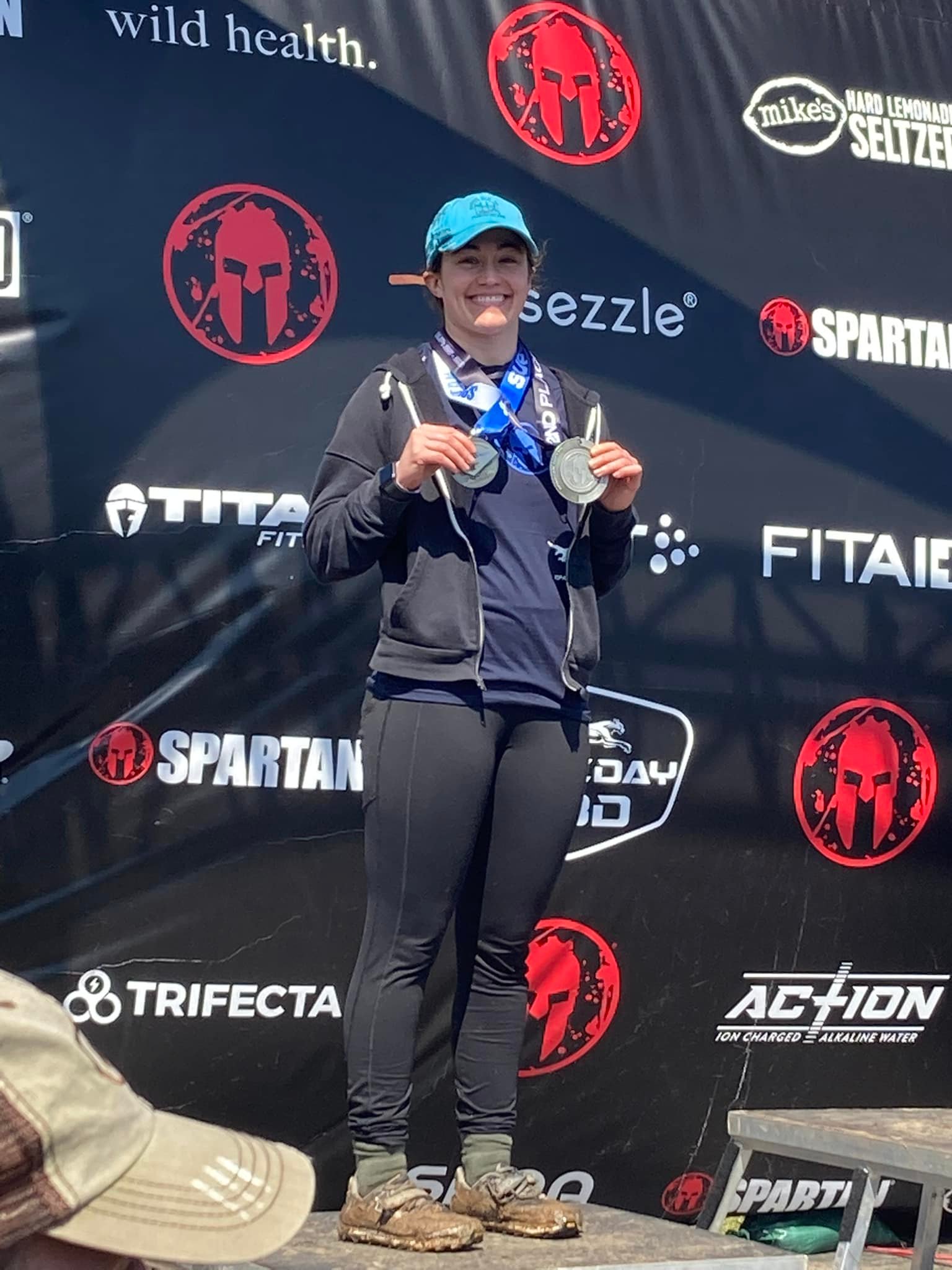
Taylor Jones is a versatile fitness enthusiast being a jack of all trades. Having initially excelled as a D-2 soccer player during her collegiate years, she transitioned her passion for sports into functional fitness, obstacle course racing, and a deep affection for outdoor adventures. Despite her demanding profession as a nurse, where she tirelessly works 12-hour shifts, Taylor manages to dedicate herself to rigorous training for competitions while finding solace in the company of her husband and two beloved dogs. With a keen focus on her athletic pursuits, Taylor’s primary objective has revolved around participating in the RF Challenges over the past two years. In both 2023 and 2022, her dedication bore fruit as she clinched the 2nd place title for the overall scoring.
Build Your Dream Home Gym with Ironmaster
Since 1978, Ironmaster has been trusted by serious lifters and home gym enthusiasts for delivering the best in heavy-duty, modular strength equipment built to last a lifetime. Whether you’re just getting started or upgrading your existing setup, Ironmaster.com has everything you need to train smarter at home—without compromising on quality. Start with the foundation: the legendary Super Bench Adjustable Weight Bench, known for its rock-solid stability and unmatched versatility. Then, level up your workouts with our Quick-Lock Adjustable Dumbbells, a fan-favorite for their rapid adjustability and space-saving, plate-sharing design. Need serious strength training capabilities? Add the all-in-one IM2000 Self-Spotting Machine, a hybrid Smith-style half rack that makes it easy to lift heavy safely, even when training alone. With dozens of compatible attachments, you can outfit a full-body gym in your garage, basement, or spare room.
Ready to save? Use our Custom Package Builder to bundle your favorite equipment and unlock automatic discounts—the more you bundle, the more you save.