
Blog
Ab Hypertrophy 101: Best Exercises, Tips, and Training Plan for Growth
The Essential Breakdown of Ab Training and Development
Meet Your Abs
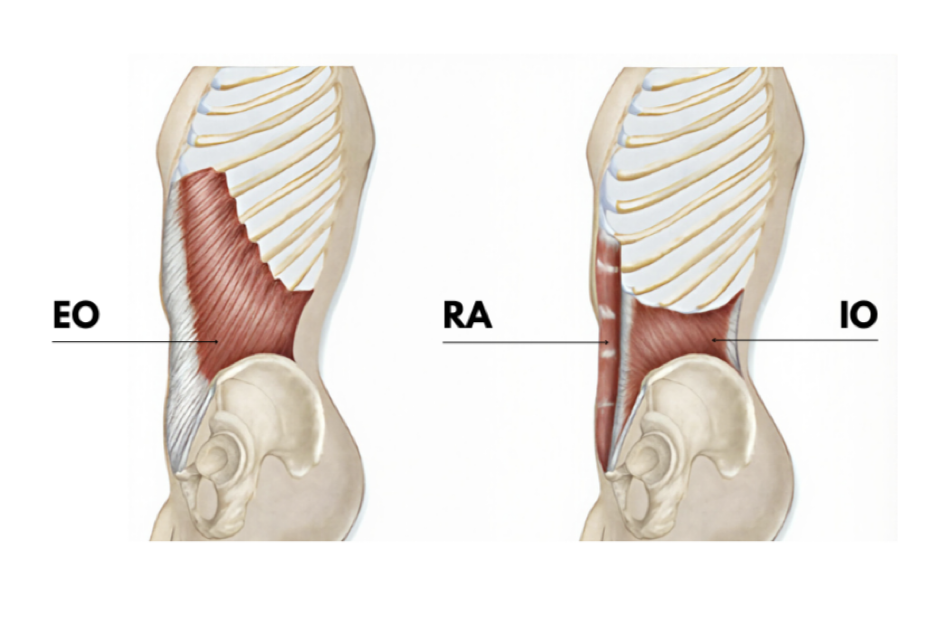
The abs discussed in this training guide are the rectus abdominis (RA), external oblique (EO) and internal oblique (IO). Each of these muscles is paired, with one located on the left side of the trunk and the other on the right. The RA, also known as the six-pack muscle, runs vertically along the midline of the anterior abdomen, while the EO and the underlying IO run diagonally in a crisscross pattern across the lateral and anterior portions of the abdomen.
Just like any other muscle group trained in the gym, the abs contract concentrically, eccentrically and isometrically to control movement, specifically of the trunk. The trunk includes the rib cage, spine and pelvis, and the abs have attachment points on and around these structures, enabling them to pull the structures together, resist their separation and stabilize their positioning.
Exercise Selection
Knowledge of the abs’ attachment sites and fiber orientations is fundamental to effective exercise selection. Take the RA for example: its vertically aligned fibers run from the pelvis to the rib cage. When the muscle contracts concentrically, it pulls these two structures closer together, producing trunk flexion. It makes sense then to select an exercise like the sit-up to target the RA because the movement challenges the same action against gravity. Furthermore, performing sit-ups on an AbMat increases range of motion (ROM) by allowing the trunk to extend beyond the neutral starting position, thereby stretching the abs and unlocking greater muscle growth potential. ROM can be defined as the extent of movement that occurs at a joint during an exercise. It’s typically measured in degrees and serves as a proxy for muscle excursion—the change in length between the maximum elongation and maximum shortening of a muscle during a movement. Prioritizing exercises that stretch and shorten the target muscles through a large ROM is key for driving growth.
In addition to involving large ROMs, it’s imperative that exercises can be loaded (safely, comfortably and efficiently) in order to provide and maintain an effective challenge. Returning to the sit-up, the exercise can be performed on an adjustable decline bench, like the Super Bench PRO V2, and increasingly loaded with dumbbells, kettlebells or a cable machine. A cable machine is also highly effective for loading trunk rotation exercises that target the obliques due to the horizontal resistance it provides.
Exercise selection should also account for limiting factors. An exercise should be appropriate for the trainee’s skill level and the target muscles should be first to fatigue during execution to ensure they receive a sufficient growth stimulus. For example, the hanging leg raise is an advanced ab exercise that requires pulling the pelvis toward the rib cage; however, if the abs aren’t strong enough to do so or if grip fails first, it’s a poor choice for building a six-pack. A more accessible option is the reverse sit-up, which replicates the same movement pattern but with the body supported on a bench, reducing grip reliance and allowing for easier progressions over time.
Exercises that meet the above criteria, plus are enjoyable and easily accessible, serve as reliable staples and can and should be used repeatedly in a hypertrophy program—there’s no need for excessive variation if the current selection is doing the trick. As training progresses, new exercises can be introduced to overcome plateaus and prevent monotony.
Loads and Repetitions
Prescribing loads in resistance training is often guided by the repetition maximum (RM) continuum—a concept suggesting that specific adaptations such as muscular strength, hypertrophy and endurance are determined by the number of repetitions performed at a given intensity (expressed as a percentage of 1RM). A 1RM is the maximum load an individual can successfully lift one time for an exercise.
Traditionally, repetitions along the RM continuum are grouped into three ranges—low, moderate and high—with the corresponding loads or intensities being inversely proportional. According to the National Strength and Conditioning Association (NSCA), training within the low repetition range with heavy loads (1–6 repetitions at ≥ 85% 1RM) optimizes muscular strength; training within the moderate repetition range with moderate loads (6–12 repetitions at 67–85% 1RM) optimizes muscular hypertrophy; and training within the high repetition range with light loads (12+ repetitions at ≤ 67% 1RM) optimizes local muscular endurance.
Although the RM continuum is commonly relied upon for determining loads, its core tenets are not without limitations. For example, the middle range of the continuum has been designated the “hypertrophy zone,” but it’s now well established that substantial muscle growth can occur across a much wider range of repetitions (e.g., 5–30), supporting a more flexible approach to load prescription.
Extending the hypertrophy zone beyond the traditional 6–12 repetition range not only promotes flexibility and variation in a training program but also offers the advantages of using both heavier loads at the lower end of the continuum and higher repetitions at the upper end. Training with heavier loads produces greater mechanical tension within muscles, which refers to the amount of force and stretch experienced under load; training with higher repetitions may induce greater metabolic stress, referring to changes in energy metabolism and metabolite concentrations during exercise. Both mechanical tension and metabolic stress are considered key mechanisms of hypertrophy; therefore, including training on both sides of the 6–12 repetition range may have a synergistic effect on muscle growth.
Effort
Research has demonstrated that a broad range of repetitions, when performed with adequate exertion, can elicit significant hypertrophy. In other words, muscle growth is highly dependent on effort regardless of the number of repetitions performed.
Because an individual’s performance can vary from session to session, prescribing loads based on a percentage of a previous 1RM may be unreliable, not to mention testing a 1RM can be difficult and time-consuming. In lieu of percentage-based training, a novel approach to load prescription has emerged—one that adapts to performance and doesn’t require 1RM assessments.
The repetitions in reserve (RIR)-based scale has proven to be a valid and practical tool for determining training loads, and its use is gaining traction in both research and applied settings. The scale measures effort based on how many repetitions the trainee believes remain in a set prior to failure, which is defined as the inability to perform another repetition. Failure is represented by 0 RIR and corresponds with maximum effort.
To better understand the connection between RIR scores and effort, the RIR scale can be compared to the traditional rate of perceived exertion (RPE) scale, which also gauges how hard a trainee is working. As illustrated in the chart below, training to “near failure” corresponds with RIR and RPE scores of 1–2 and 8–9, respectively. The RIR scale increases sequentially (as the RPE scale decreases), with each value indicating the number of repetitions believed to remain in a set. The more repetitions in reserve, the further one is from failure and the easier the set.
To maximize muscle growth, training to near failure or failure is warranted; however, recommendations may vary based on the trainee’s experience level and the context of a training session. For example, when an exercise is first introduced in a program or when the movement is more technically demanding, higher RIR scores may be advised until the movement is refined through practice. As execution improves, lower RIR scores may naturally follow.
While high levels of effort are recommended for maximizing muscle growth, caution should be taken when performing sets to failure too often or too early in a session, as fatigue can impede the performance of subsequent sets and affect training outcomes. Sets to failure may be best reserved for advanced trainees, the last set of an exercise or occasional use.
| Repetitions in Reserve (RIR) | Rate of Perceived Exertion (RPE) |
| 0 reps remaining (failure) | 10 (maximum effort) |
| 1 rep remaining (near failure) | 9 (very hard) |
| 2 reps remaining (near failure) | 8 (hard–very hard) |
| 3 reps remaining | 7 (hard) |
| 4–6 reps remaining | 5–6 (moderate) |
| – | 3–4 (easy) |
| – | 1–2 (very easy) |
Adapted from Zourdos et al. 2016.
Volume
Like effort, sufficient volume is essential for muscle growth. When discussing hypertrophy training, volume refers to the number of hard sets per muscle group per week. Hard implies that sets are performed to near failure or failure. The effects of volume on hypertrophy are dose-dependent—generally as volume increases, muscle growth increases. However, excessive training with insufficient recovery can increase fatigue and injury risk, hindering performance and desired outcomes.
Determining the optimal training volume requires trial and error, as findings can vary significantly between individuals and even between muscle groups. Despite limited research focused on ab training, inferences can be drawn from studies conducted on other muscles and general recommendations can be made.
Recent literature suggests 10–20 sets per muscle group per week, including multiple sets per exercise, is optimal for muscle growth; however, more or less volume may be necessary depending on the individual. A good rule of thumb is to start at the lower end of the range and gradually add sets as needed to maintain progress while ensuring adequate recovery.
Because the RA and obliques have both distinct and synergistic functions, their training volumes should be calculated separately based on their involvement in a given exercise. For example, the obliques are the primary trunk rotators and lateral flexors, but they also assist the RA in forward trunk flexion. Direct oblique training should therefore include trunk rotation and lateral flexion exercises, while also accounting for their role in forward flexion. Understanding the specific roles of the RA and obliques across different movements helps ensure each muscle receives appropriate training volume. It also informs exercise order, as the demands of one exercise can influence the performance of the next.
After several weeks of consistent training or when fatigue sets in and progress stalls, a deload may be necessary. A deload is a transient period, often 5–7 days, of reduced training stress intended to promote recovery and improve performance. Reductions in volume, load or repetitions can help manage stress and should be customized to the individual. Deloads can be incorporated into a training program proactively by planning in advance or reactively in response to performance. Because adequate recovery is essential for sustained progress, incorporating deloads within a training program is an effective strategy for optimizing muscle growth.
Frequency
Frequency, as it relates to hypertrophy training, refers to the number of times a muscle group is trained per week. Studies have measured muscle growth in response to varying frequencies—such as once, twice or multiple times per week—using either equal or different volumes. When volume is equated, frequency does not appear to have a meaningful impact on hypertrophy. For example, if twelve sets of ab exercises are performed weekly, completing all twelve sets in one session can be just as effective for muscle growth as splitting them into six sets twice per week or four sets three times per week. That said, studies that equate volume overlook a primary advantage of higher training frequencies: training a muscle group more than once per week enables more volume to be achieved, and more volume can lead to more growth.
In support of higher training frequencies (e.g., 2–3 times per week), there’s an upper limit to how much volume a single session can include before fatigue builds and performance drops. Training beyond this threshold is often referred to as “junk volume,” as it’s believed to offer little to no additional benefit for muscle growth and may even be counterproductive. Therefore, as training progresses and more weekly sets accrue, splitting the higher volume demands into more weekly sessions becomes essential for optimizing performance and outcomes.
Ultimately, the optimal frequency depends on the volume and recovery needs of the individual and how to best distribute those variables over time. Lifestyle factors such as work, family and social obligations also play a significant role, as they can heavily influence the structure and consistency of a training schedule. Regardless of whether the abs are trained once, twice or several times per week, significant muscle growth can be achieved provided volume is sufficient.
Inter-Set Rest
The length of rest between sets can significantly influence performance and, in turn, training outcomes. Historically, short rest durations (≤ 60 seconds) were considered more effective for promoting muscle growth than longer durations due to higher growth hormone concentrations observed following training. However, hypertrophy is not directly caused by elevated growth hormone levels, nor has there ever been sufficient evidence to support the idea that short rest periods are superior for maximizing muscle growth.
Inter-set rest durations can be split into four ranges: short (≤ 60 seconds), intermediate (> 60 to < 120 seconds), long (≥ 120 to < 180 seconds) and very long (≥ 180 seconds). Emerging research suggests that the 1–3-minute range may be optimal for promoting muscle growth. Compared to short rest periods, this range allows for more recovery, which can help minimize fatigue and maintain greater force production throughout a training session. On the other hand, while rest periods exceeding three minutes may offer additional recovery, they can significantly extend the overall length of a session, making the 1–3-minute range a more time-efficient and practical choice.
As with other training variables, there is no single best inter-set rest duration. The optimal rest period depends on individual factors and the context of the training session. For example, depending on the trainee’s goals and recovery capacity, as well as the prescribed intensities and types of exercises (e.g., single- versus multi-joint), shorter or longer rest intervals may be necessary to meet the demands of each set. With experience, trainees can learn to accurately gauge how much rest they need to perform each set effectively.
Accentuated Eccentric Loading
Accentuated eccentric loading (AEL) is an increasingly popular resistance training method that employs heavier loads during the eccentric phase of an exercise than during the concentric phase.* AEL is based on the understanding that a muscle is able to exert more force (+20–50%) during a lengthening contraction than the reciprocal shortening contraction. In other words, it’s easier to lower a load than it is to lift it.
AEL takes advantage of eccentric strength by “overloading” the lowering phase of an exercise, effectively increasing muscle tension during stretch relative to conventional repetitions. For this reason and via mechanisms not fully elucidated in the literature, AEL is believed to enhance muscle growth.
Because AEL utilizes loads that often exceed concentric strength, exercise setup and execution can be challenging. Having a training partner or digital resistance machine available to assist with loading and unloading is a significant advantage, enabling the performance of many effective eccentric-focused exercises. When a partner or specialized machine isn’t available, the ability to manipulate external moment arms to adjust exercise difficulty during the eccentric and concentric phases is essential for successful AEL execution. An external moment arm is the perpendicular distance between the line of action of an external force (e.g., the downward force of dumbbells due to gravity or the directional force of a cable) and the axis of rotation of the joint it acts upon. The greater the external moment arm, the harder the exercise becomes.
Including AEL in a training program may help stimulate muscle growth while also adding exercise variety. As a general guideline, AEL can be performed as standalone sets or integrated at the end of conventional sets once target repetitions have been completed or concentric force is depleted in order to utilize the remaining eccentric capacity. When implemented as standalone sets, eccentric load can be prescribed in excess of concentric load (e.g., 40 lbs. CON/60 lbs. ECC) or prescribed as “eccentrics only,” in which the concentric phase is omitted entirely
*AEL is typically described as a resistance training method that employs heavier loads during the eccentric phase of an exercise than during the concentric phase. However, loads are not the only factor at play. The difficulty of an exercise is influenced by both forces and moment arms, which together produce torque—the rotational force around a joint. Therefore, AEL can utilize both heavier loads and greater external moment arms during the eccentric phase of an exercise relative to the concentric phase.
Range of Motion
As mentioned earlier, range of motion (ROM) refers to the extent of movement that occurs at a joint during an exercise. ROM can be categorized as full or partial. When an exercise is performed through its full ROM, the target muscles undergo large length changes producing the maximal joint movement available for that exercise. In contrast, when an exercise is performed through a partial ROM, the target muscles undergo smaller length changes resulting in limited joint movement.
Partial ROM can be further classified into long-length partials (LLPs) and short-length partials (SLPs). An LLP is a partial repetition that occurs within the initial ROM of an exercise where the target muscles are at longer lengths. An SLP is just the opposite—a partial repetition that occurs within the final ROM of an exercise where the target muscles are at shorter lengths. As more research focuses on hypertrophic responses to varying ROMs, evidence is growing in support of LLPs as an effective strategy for muscle growth. By limiting an exercise to its initial ROM, LLPs provide more exposure to long muscle lengths and can also allow for heavier loading compared to full-ROM repetitions. For these reasons, LLPs are believed to enhance muscle growth.
Studies have consistently shown that LLPs result in greater hypertrophy than SLPs and are at least as effective as full-ROM repetitions. While full-ROM repetitions maximize muscle excursion and promote strength adaptations across the entire movement, LLPs capitalize on loading muscles at long lengths. Given the distinct advantages of both full-ROM repetitions and LLPs, incorporating both into a training program can potentially maximize benefits while promoting exercise variation. Although LLPs show promise, current findings are limited to the specific exercises and muscles studied and should not be generalized across all exercises and muscle groups.
Similar to AEL, LLPs can be programmed as standalone sets or added to the end of conventional sets when full ROM has been exhausted. LLPs can also be integrated between full-ROM repetitions as another way to increase exposure to long muscle lengths. While oblique exercises like the cable decline rotation are well-suited for LLP application, many ab exercises are not ideal for their use and may not provide additional benefits.
Repetition Duration
Repetition duration refers to the time taken to complete one full repetition of an exercise. Current research suggests that a broad range of durations, typically between two and eight seconds, can be equally effective for promoting muscle growth. In contrast, repetition durations exceeding eight seconds appear to be suboptimal for hypertrophy.
A repetition of an exercise generally consists of three phases: concentric, eccentric and transition (isometric). The transition phase occurs between the eccentric and concentric actions. The duration of each phase, and thus the repetition duration, can vary naturally depending on the magnitude of the load and the individual’s fatigue level. Additionally, phase durations can be intentionally adjusted as a training strategy to elicit specific adaptations.
Intentionally increasing the duration of the eccentric phase of an exercise is a common resistance training technique, used not only as a potential growth stimulus but also for practical purposes. Slowing down the eccentric contraction (e.g., to 2–4 seconds) facilitates better control of the load during the lengthening phase and the subsequent transition phase—where the risk of injury is typically highest. It also helps ensure that the muscle remains actively engaged, preventing the load from being lowered passively by gravity.
To better illustrate how repetition durations can be prescribed in training, consider an ab exercise performed with five-second repetitions comprising a three-second eccentric, a one-second transition and a one-second concentric phase. No pause is taken between repetitions. This tempo can be written in a program as 3/1/1/0. The numbers represent, in order: the eccentric, transition and concentric phases and the pause between repetitions. When the letter “X” is used in place of a number (e.g., 3/1/X/0), it denotes an “explosive” or maximal contraction velocity.
The optimal duration of the concentric, eccentric and transition phases for muscle growth remains a topic of debate. What can be inferred is that loads should be managed safely and repetition durations should stay within a 2–8-second range. This broad range accommodates individual preferences and promotes variety in a training program.
Progressive Overload
In order for muscle growth to persist, resistance training must continue to provide a sufficient challenge. This well-established principle, known as progressive overload, relies on the manipulation of training variables to maintain an effective growth stimulus.
Although progressive overload is often associated with gradual increases in load, other variables such as repetitions, effort and volume can also be manipulated to drive growth. As training advances, adjusting frequency and incorporating different exercises or techniques, including LLPs and AEL, become increasingly important strategies for maintaining progress. Additionally, supersets, drop sets and rest-pause sets can be implemented to provide a novel challenge and add variety to a training program. These different set configurations can also be used to reduce session duration or increase volume.
Given the many ways progressive overload can be applied in training, there is no single best program for hypertrophy. Continued progress can be achieved provided training variables are strategically adjusted to challenge muscles beyond their current capacity.
Programming
Multiple programming models have been developed to provide structure for progressive overload, with two of the most common being linear and undulating programming. Linear programming gradually increases loads as repetitions decrease over the course of training, whereas undulating programming varies intensities in wavelike fashion, usually daily or weekly, throughout training. Although these programming models are distinct, they are not mutually exclusive. Different models share common aspects and can be implemented simultaneously within the same program to progress various exercises.
Initially, a trainee may apply linear programming to an ab exercise by gradually increasing loads over the training cycle. For example, they might perform 3×10–12 during the initial four weeks, 3×8–10 in the following four weeks and 3×6–8 in the subsequent four weeks, increasing the load incrementally throughout. This stepwise progression is often well-suited for beginners or those performing new exercises, as the potential for strength gains and load increases is typically higher in the early stages of training.
| Weeks | Sets | Reps | RIR |
| 1–4 | 3 | 10–12 | 0–2 |
| 5–8 | 3 | 8–10 | 0–2 |
| 9–12 | 3 | 6–8 | 0–2 |
The table above provides an example of linear programming for an exercise. Load gradually increases as repetitions decrease over the training cycle.
As a trainee progresses, implementing a form of undulating programming may become a more effective strategy. As an example of daily undulating programming, the dumbbell decline sit-up might be prescribed as 4×6 in one session, 4×8 in the next and 4×10 in the following, with this sequence repeated over several weeks as the load is adjusted based on performance. This wavelike approach is often better suited for trainees who have plateaued with linear programming and require more variation to sustain progress.
| Session | Sets | Reps | RIR |
| 1 | 4 | 6 | 0–2 |
| 2 | 4 | 8 | 0–2 |
| 3 | 4 | 10 | 0–2 |
| 4 | 4 | 6 | 0–2 |
| 5 | 4 | 8 | 0–2 |
| 6 | 4 | 10 | 0–2 |
| 7 | 4 | 6 | 0–2 |
The table above provides an example of daily undulating programming for an exercise. Intensities vary session to session in a wavelike pattern.
Another common programming model is double progression. With this method, a repetition range and load are selected (e.g., 8–12 repetitions and 25 lbs.) for a specific number of sets (e.g., 3 sets). The load remains constant while the trainee works to achieve more repetitions within the range across multiple sessions. Once the top of the repetition range is fully accomplished for each set (e.g., 3×12 @ 25 lbs.), the load is increased and the process is repeated.
| Session | Sets | Selected Rep Range | Reps Achieved | Load (lbs.) | RIR |
| 1 | 3 | 8–12 | 9, 9, 8 | 25 | 0–2 |
| 2 | 3 | 8–12 | 10, 9, 9 | 25 | 0–2 |
| 3 | 3 | 8–12 | 11, 10, 9 | 25 | 0–2 |
| 4 | 3 | 8–12 | 12, 10, 10 | 25 | 0–2 |
| 5 | 3 | 8–12 | 12, 12, 11 | 25 | 0–2 |
| 6 | 3 | 8–12 | 12, 12, 12 | 25 | 0–2 |
| 7 | 3 | 8–12 | 10, 9, 8 | 30 | 0–2 |
The table above provides an example of double progression for an exercise. Load stays constant until the top of the repetition range is achieved for all sets.
Linear, undulating and double progression models offer different approaches to structuring training and can vary in effectiveness depending on an individual’s goals, experience level and rate of adaptation. While structure is important for guiding and tracking progress, so too is flexibility for accommodating fluctuations in performance and unforeseen circumstances, such as equipment unavailability, work and social obligations. With experience, an individual’s ability to autoregulate—meaning to self-adjust training variables based on performance—typically becomes more refined, enabling more precise modifications that optimize outcomes.
Using the RIR scale to gauge effort and determine training loads is an example of autoregulation. If an exercise is prescribed as 3×10 at 1 RIR, the trainee selects a load they believe will allow them to complete the target repetitions with one repetition left in reserve. As the session progresses, load adjustments can be made based on performance to improve accuracy. Additionally, other training variables such as exercise selection and order can be autoregulated. For example, if the cable decline rotation is prescribed as 4×8 but a decline bench is unavailable and time is limited, quick substitutions can be made. Choosing a different oblique exercise (e.g., cable rotation) and pairing it with another movement in a superset can accommodate these limitations while preserving the training intent.
To sum up, both structure and flexibility are key components of an effective hypertrophy program, with the optimal balance depending on the individual. Establishing a plan through the use of a programming model and making systematic adjustments throughout training support consistent, long-term progress.
Putting It All Together
- Select 1–4 exercises for each ab session from the Exercise Menu on the following page or from other reputable sources, ensuring sufficient volume for both the RA and obliques. Sample workouts are provided in the Workouts section and can be customized by substituting any exercise for another listed under the same category in the Exercise Menu.
- The abs can be trained alongside other muscle groups in the same session, as in full-body or split routines, or prioritized in standalone sessions.
- Although the 6–12 repetition range is generally regarded as the “hypertrophy zone,” a wide range of repetitions (e.g., 5–30) can elicit significant muscle growth provided sets are performed to near failure or failure (0–2 RIR).
- Recent literature suggests 10–20 sets per muscle group weekly, including multiple sets per exercise, is optimal for muscle growth. Because the RA and obliques have both distinct and synergistic functions, their training volumes should be calculated separately based on their involvement in a given exercise.
- Each ab exercise should be performed safely through its full ROM. When applicable, implementing LLPs or AEL may enhance muscle growth while adding variety to a training program.
- Repetition durations of 2–8 seconds are recommended and can include various tempos for the concentric, eccentric and transition phases. A slower eccentric phase (e.g., 2–4 seconds) may be particularly beneficial as both a growth stimulus and safety mechanism.
- Rest as needed between sets to maintain the prescribed intensities. Generally, inter-set rest durations of 1–3 minutes are appropriate.
- Continue to progress the selected ab exercises throughout training, adding or substituting movements as needed.
- Supersets, drop sets and rest-pause sets can be used to reduce session duration or increase training volume, while providing a novel challenge and adding variety to a program.
- Use a programming model (e.g., linear, undulating or double progression) to provide structure for progressive overload, making adjustments as needed based on performance and external factors.
- After several weeks of consistent training or when fatigue sets in and progress stalls, a deload period may be necessary to promote recovery and improve performance.
Exercise Menu
| Rectus Abdominis | Obliques |
| Top-Down Flexion | Rotation |
| DB decline sit-up* | Cable decline rotation |
| DB decline sit-up ECCs* | Cable decline rotation integrated LLPs |
| Cable decline sit-up* | Cable decline rotation LLPs |
| Bottom-Up Flexion | Cable standing rotation |
| Incline reverse sit-up* | Cable standing rotation ECCs |
| Isometric | Lateral Flexion |
| Dragon flag | Roman chair side bend |
*Use an AbMat whenever possible to train the abs through a greater ROM.
Sample Workouts
| Exercise | Sets | Reps | Duration (s) | RIR | Rest (s) | |
| A1 | DB decline sit-up* | 2 | 8–10 | 2/0/1/0 | 0–2 | 0–30 |
| A2 | Cable standing rotation | 2 | 8–10 | 2/0/1/0 | 0–2 | 30/90/90 |
| B1 | DB decline sit-up ECCs* | 2 | 8–10 | 3/0/0/0 | 0–2 | 0–30 |
| B2 | Cable standing rotation ECCs | 2 | 8–10 | 3/0/0/0 | 0–2 | 30/90 |
Exercises A1 and A2 form a superset, as do B1 and B2. Rest minimally after A1 and B1, and rest as needed after A2 and B2 to maintain the prescribed intensities.
| Exercise | Sets | Reps | Duration (s) | RIR | Rest (s) | |
| A | Cable decline rotation | 1 | 10 | 2/0/1/0 | 0–2 | 45/90 |
| B | Cable decline rotation integrated LLPs | 1 | Max | 1–2/0/1/0 | 0 | 45/90 |
| C | Cable decline rotation LLPs | 1 | Max | 1/0/1/0 | 0 | 45/90 |
| D | Incline reverse sit-up* | 2 | 10 | 2/0/1/0 | 0–2 | 90/90 |
| E | Dragon flag (lowering only) | 2 | Max | 3/0/0/0 | 0–2 | 90 |
Use the same load for exercises B and C as for exercise A.
| Exercise | Sets | Reps | Duration (s) | RIR | Rest (s) | |
| A1 | DB decline sit-up* | 2 | 8 | 2/0/1/0 | 0–2 | 0 |
| A2 | Roman chair side bend | 2 | 8 | 2/0/1/0 | 0–2 | 0–30/90 |
| B1 | DB decline sit-up ECCs* | 2 | 8 | 3/0/0/0 | 0–2 | 0 |
| B2 | Roman chair side bend | 2 | 8 | 2/0/1/0 | 0–2 | 0–30/90 |
Exercises A1 and A2 form a superset, as do B1 and B2. Rest minimally after A1 and B1, and rest as needed after A2 and B2 to maintain the prescribed intensities.
About the Author
Susan Cashdollar is certified gym rat based in New York City. She holds a Master of Science in Exercise Physiology and a strength and

conditioning certification (CSCS) through the National Strength and Conditioning Association (NSCA). When she’s not training herself or others, she’s thinking about training, reading about training or talking about training. In her spare time, she likes to train. Check out her website gymcrasher.com and send suggestions on where she should train next.
Build Your Dream Home Gym with Ironmaster
Since 1978, Ironmaster has been trusted by serious lifters and home gym enthusiasts for delivering the best in heavy-duty, modular strength equipment built to last a lifetime.
Whether you’re just getting started or upgrading your existing setup, Ironmaster.com has everything you need to train smarter at home—without compromising on quality.
Start with the foundation: the legendary Super Bench Adjustable Weight Bench, known for its rock-solid stability and unmatched versatility. Then, level up your workouts with our Quick-Lock Adjustable Dumbbells, a fan-favorite for their rapid adjustability and space-saving, plate-sharing design.
Need serious strength training capabilities? Add the all-in-one IM2000 Self-Spotting Machine, a hybrid Smith-style half rack that makes it easy to lift heavy safely, even when training alone. With dozens of compatible attachments, you can outfit a full-body gym in your garage, basement, or spare room.
Ready to save? Use our Custom Package Builder to bundle your favorite equipment and unlock automatic discounts—the more you bundle, the more you save.
References
- Afonso et al. (2020). Nonlinear periodization in strength training
- Korakakis et al. (2024). Resistance training technique and hypertrophy
- Azevedo et al. (2022). Eccentric tempos and muscle growth
- Baz-Valle et al. (2022). Effects of different resistance training volumes on muscle hypertrophy
- Baz-Valle et al. (2021). Total number of sets as a training volume quantification method for muscle hypertrophy
- Bell et al. (2022). “You can’t shoot another bullet until you’ve reloaded the gun”: Coaches’ perceptions and practices of deloading
- Bell et al. (2023). Integrating deloading into strength and physique sports training programmes
- Bernárdez-Vázquez et al. (2022). Resistance training variables for optimization of muscle hypertrophy: An umbrella review
- Bezerra et al. (2021). Resistance training exercise selection: Efficiency, safety and comfort analysis method
- Brown et al. (2011). Architectural analysis of human abdominal wall muscles: Implications for mechanical function
- de Salles et al. (2009). Rest interval between sets in strength training
- Enes et al. (2021). Rest-pause and drop-set training elicit similar strength and hypertrophy adaptations
- Evans (2019). Periodized resistance training for enhancing skeletal muscle hypertrophy and strength: A mini-review
- Flynn & Vickerton (2023 update). Anatomy, Abdomen and Pelvis: Abdominal Wall
- Gomirato & Grenier (2023). Diagnostic ultrasound shows preferential activation of rectus abdominis segments
- Greig et al. (2020). Autoregulation in resistance training: Addressing the inconsistencies
- Griffiths (1991). Shortening of muscle fibres during stretch of the active cat medial gastrocnemius muscle
- Halperin & Vigotsky (2024). An integrated perspective of effort and perception of effort
- Haun et al. (2019). A critical evaluation of the biological construct skeletal muscle hypertrophy
- Helms et al. (2016). Application of the RIR-based RPE scale for resistance training
- Henselmans & Schoenfeld (2014). Effect of inter-set rest intervals on hypertrophy
- Hessel et al. (2017). Physiological mechanisms of eccentric contraction
- Iversen et al. (2021). Time-efficient training programs for hypertrophy
- Fisher et al. (2020). The strength-endurance continuum revisited
- Kassiano et al. (2023). Greater gastrocnemius hypertrophy with long-length ROM
- Kassiano et al. (2022). Does varying exercises promote superior gains?
- Kinney et al. (2020). EMG of obliques during isometric trunk tasks
- Koh & Herzog (1998). Excursion regulates sarcomere number
- Krieger (2010). Single vs. multiple sets for hypertrophy
- Krzysztofik et al. (2019). Advanced resistance training techniques
- Larsen et al. (2021). Autoregulation methods in resistance training
- Lorenz & Morrison (2015). Periodization concepts for sports physical therapists
- Lorenz et al. (2010). Periodization for athletic rehabilitation
- Mangine et al. (2022). RIR strategy and bench press performance
- Marchetti et al. (2011). Selective RA activation in low-intensity tasks
- Minor et al. (2020). Mesocycle progression: volume vs. intensity
- Mirka et al. (1997). EO activation during axial torque
- Moesgaard et al. (2022). Periodization effects on strength and hypertrophy
- Newmire & Willoughby (2018). Partial vs. full ROM resistance training
- Ng et al. (2001). Functional roles of trunk muscles during axial rotation
- Norris et al. (1993). Abdominal muscle training in sport
- Oranchuk et al. (2019). Isometric training and long-term adaptations: Effects of muscle length, intensity, and intent: A systematic review
- Parfrey et al. (2008). The effects of different sit- and curl-up positions on activation of abdominal and hip flexor musculature
- Pedrosa et al. (2023). Training in the Initial Range of Motion Promotes Greater Muscle Adaptations Than at Final in the Arm Curl
- Plotkin et al. (2022). Progressive overload without progressing load? The effects of load or repetition progression on muscular adaptations
- Prestes et al. (2019). Strength and Muscular Adaptations After 6 Weeks of Rest-Pause vs. Traditional Multiple-Sets Resistance Training in Trained Subjects
- Proske et al. (2001). Muscle damage from eccentric exercise: mechanism, mechanical signs, adaptation and clinical applications
- Rai et al. (2018). Tendinous Inscriptions of the Rectus Abdominis: A Comprehensive Review
- Refalo et al. (2023). Similar muscle hypertrophy following eight weeks of resistance training to momentary muscular failure or with repetitions-in-reserve in resistance-trained individuals
- Rogerson et al. (2024). Deloading Practices in Strength and Physique Sports: A Cross-sectional Survey
- Schoenfeld et al. (2019). Resistance Training Volume Enhances Muscle Hypertrophy but Not Strength in Trained Men
- Schoenfeld et al. (2021). Resistance Training Recommendations to Maximize Muscle Hypertrophy in an Athletic Population: Position Stand of the IUSCA
- Schoenfeld et al. (2020). Effects of range of motion on muscle development during resistance training interventions: A systematic review
- Schoenfeld et al. (2019). How many times per week should a muscle be trained to maximize muscle hypertrophy? A systematic review and meta-analysis
- Schoenfeld et al. (2017). Strength and Hypertrophy Adaptations Between Low- vs. High-Load Resistance Training: A Systematic Review and Meta-analysis
- Schoenfeld et al. (2021). Loading Recommendations for Muscle Strength, Hypertrophy, and Local Endurance: A Re-Examination of the Repetition Continuum
- Schoenfeld et al. (2017). Dose-response relationship between weekly resistance training volume and increases in muscle mass: A systematic review and meta-analysis
- Schoenfeld et al. (2015). Effect of repetition duration during resistance training on muscle hypertrophy: a systematic review and meta-analysis
- Schoenfeld et al. (2016). Effects of Resistance Training Frequency on Measures of Muscle Hypertrophy: A Systematic Review and Meta-Analysis
- Schoenfeld et al. (2017). Hypertrophic Effects of Concentric vs. Eccentric Muscle Actions: A Systematic Review and Meta-analysis
- Schoenfeld et al. (2016). Longer Interset Rest Periods Enhance Muscle Strength and Hypertrophy in Resistance-Trained Men
- Silva et al. (2023). Linear and undulating resistance training programming induce similar outcomes on physical fitness in elderly women
- Sødal et al. (2023). Effects of Drop Sets on Skeletal Muscle Hypertrophy: A Systematic Review and Meta-analysis
- Stone et al. (2021). Periodization and Block Periodization in Sports: Emphasis on Strength-Power Training-A Provocative and Challenging Narrative
- Vigotsky et al. (2018). Interpreting Signal Amplitudes in Surface Electromyography Studies in Sport and Rehabilitation Sciences
- Villanueva et al. (2012). Influence of rest interval length on acute testosterone and cortisol responses to volume-load-equated total body hypertrophic and strength protocols
- Wackerhage et al. (2019). Stimuli and sensors that initiate skeletal muscle hypertrophy following resistance exercise
- Wagle et al. (2017). Accentuated Eccentric Loading for Training and Performance: A Review
- Walker et al. (2016). Greater Strength Gains after Training with Accentuated Eccentric than Traditional Isoinertial Loads in Already Strength-Trained Men
- Wilk et al. (2021). The Influence of Movement Tempo During Resistance Training on Muscular Strength and Hypertrophy Responses: A Review
- Workman et al. (2008). Influence of pelvis position on the activation of abdominal and hip flexor muscles
- Zabaleta-Korta et al. (2023). Regional Hypertrophy: The Effect of Exercises at Long and Short Muscle Lengths in Recreationally Trained Women
- Zourdos et al. (2016). Novel Resistance Training–Specific Rating of Perceived Exertion Scale Measuring Repetitions in Reserve